CVE-2026-1281, CVE-2026-1340: Ivanti Endpoint Manager Mobile (EPMM) Zero-Day Vulnerabilities Exploited
Two Critical vulnerabilities in Ivanti’s popular mobile device management solution have been exploited in the wild in limited attacks
Key takeaways:
- Patch Ivanti EPMM immediately. Both CVE-2026-1281 and CVE-2026-1340 have been exploited in the wild, though impact has been limited so far. Apply the temporary RPM patches now while waiting for version 12.8.0.0 to be released in Q1 2026.
- Threat actors routinely target Ivanti. These products are a frequent target for attackers, as evidenced by the multiple vulnerabilities in EPMM that have been exploited-in-the-wild since 2020.
- Exploitation risk is high. With public proof-of-concept code already available for both CVEs, expect widespread scanning and exploitation attempts.
Background
On January 29, Ivanti released a security advisory to address two critical severity remote code execution (RCE) vulnerabilities in its Endpoint Manager Mobile (EPMM), formerly known as MobileIron Core, a mobile management software used for mobile device management (MDM), mobile application management (MAM) and mobile content management (MCM).
| CVE | Description | CVSSv3 |
|---|---|---|
| CVE-2026-1281 | Ivanti Endpoint Manager Mobile Remote Code Execution Vulnerability | 9.8 |
| CVE-2026-1340 | Ivanti Endpoint Manager Mobile Remote Code Execution Vulnerability | 9.8 |
Analysis
CVE-2026-1281 and CVE-2026-1340 are both code injection vulnerabilities in Ivanti’s EPMM. An unauthenticated attacker could exploit these vulnerabilities to gain remote code execution.
Limited exploitation observed
According to Ivanti, both CVE-2026-1281 and CVE-2026-1340 were exploited as zero-days affecting “a very limited number of customers.” Because its investigation is ongoing, Ivanti has not yet provided any indicators of compromise in relation to these attacks.
Historical exploitation of Ivanti Endpoint Mobile Manager
Ivanti products in general are a popular target for a variety of attackers. EPMM in particular has been targeted in the past, and the Tenable Research Special Operations (RSO) team has authored several blogs about these vulnerabilities. The following table outlines some of the notable EPMM vulnerabilities over the last six years:
Proof of concept
At the time this blog was published on January 30, a public proof-of-concept (PoC) exploit was publicly available. We expect attackers will begin to leverage this PoC to conduct mass scanning and exploitation attempts against vulnerable devices.
Solution
Ivanti has released temporary updates that can be applied to address these vulnerabilities. According to the advisory, the RPMs supplied should be applied based on the installed version of EPMM. The RPMs will not survive a version upgrade, so if the version is updated, the RPM would need to be applied once again. However, the advisory further notes that an upcoming release, version 12.8.0.0, is expected to be released in Q1 2026., T and this version will include the permanent fix for these CVEs. Once version 12.8.0.0 is released and applied, the RPM scripts will no longer need to be applied.
| Affected Version | RPM Patch Version |
|---|---|
| 12.5.0.0 and prior | RPM 12.x.0.x |
| 12.5.1.0 and prior | RPM 12.x.1.x |
| 12.6.0.0 and prior | RPM 12.x.0.x |
| 12.6.1.0 and prior | RPM 12.x.1.x |
| 12.7.0.0 and prior | RPM 12.x.0.x |
For more information on the patches, we strongly recommend reviewing the guidance in the security advisory from Ivanti.
Identifying affected systems
A list of Tenable plugins for these vulnerabilities can be found on the individual CVE pages for CVE-2026-1281 and CVE-2026-1340 as they’re released. This link will display all available plugins for these vulnerabilities, including upcoming plugins in our Plugins Pipeline.
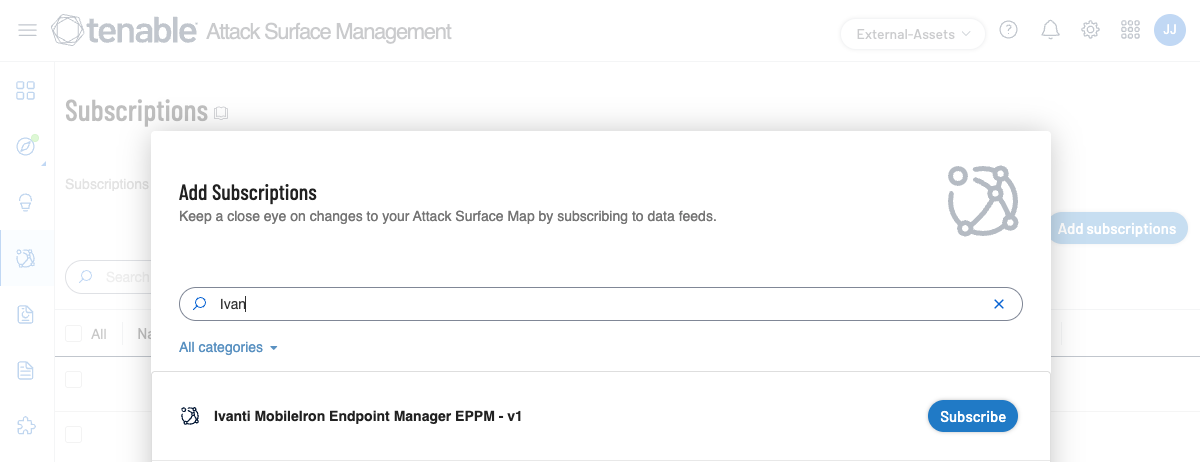
Additionally, customers can utilize Tenable Attack Surface Management to identify public facing assets running Ivanti devices by using the following subscription:
Get more information
- Ivanti Security Advisory: Ivanti Endpoint Manager Mobile (EPMM) (CVE-2026-1281 & CVE-2026-1340)
- Someone Knows Bash Far Too Well, And We Love It (Ivanti EPMM Pre-Auth RCEs CVE-2026-1281 & CVE-2026-1340)
Join Tenable's Research Special Operations (RSO) Team on Tenable Connect and engage with us in the Threat Roundtable group for further discussions on the latest cyber threats.
Learn more about Tenable One, the Exposure Management Platform for the modern attack surface.
Learn more

Learn more
Related articles

- Exposure Management
- Vulnerability Management
Tenable One
Request a demo
The world’s leading AI-powered exposure management platform.
Thank You
Thank you for your interest in Tenable One.
A representative will be in touch soon.
Form ID: 7469
Form Name: one-eval
Form Class: c-form form-panel__global-form c-form--mkto js-mkto-no-css js-form-hanging-label c-form--hide-comments
Form Wrapper ID: one-eval-form-wrapper
Confirmation Class: one-eval-confirmform-modal
Simulate Success